How LEGO® Serious Play® helped Year 5 build a high-performing playground team
A Warwickshire primary-school class used the same workshop design as a corporate team to make playtime calmer, happier and more inclusive.
In a single-entry primary school, it can be difficult to make sure the playground feels inclusive to every child. There are new joiners, sporty children, quiet children and those who cannot see a way into an established game. We all know the heartbreak of a child standing around the edge.
The context and challenge
It is easy to assume that we, as adults, have little to learn from children about collaboration and teamwork. A recent LEGO® Serious Play® workshop with a Year 5 class offered plenty of lessons that transfer to the corporate world as we try to build high-performing teams and solve difficult problems.
This highly diverse class was experiencing repeated relationship challenges during playtime. Games had become complex, with rules constantly introduced and adapted. Children who were not involved in changing those rules could be immediately eliminated or lose. A strong in-group and out-group culture had developed, alongside more interventions from parents who believed their child was being picked on or excluded.
Unwritten rules and a club that holds all the social and political power, with no clear way to join. Does that sound familiar?
Why LEGO® Serious Play®?
LEGO® Serious Play® is a method in which teams build three-dimensional models to think differently and creatively about a challenge. That is where the name "Serious Play" comes from. The process gives people a psychologically safe way to represent their thoughts, opinions and ideas, understand the current situation and agree a shared action plan.
The inclusive facilitation process helps with relationships because it gives the group a shared understanding of people's perceptions and feelings without making the discussion personal. It is not about me; it is about the LEGO® model.
Ask me to draw my superpower on a flipchart and my mind goes blank because I cannot draw. Give me a bag of LEGO® bricks and hands-on knowledge kicks into action. Everyone can build a model, give meaning to every brick and tell its story.
For more examples of how organisations use LEGO® Serious Play®, explore the Hall of Fame case studies.
A workshop design shared with the corporate world
-
1. Build the skills
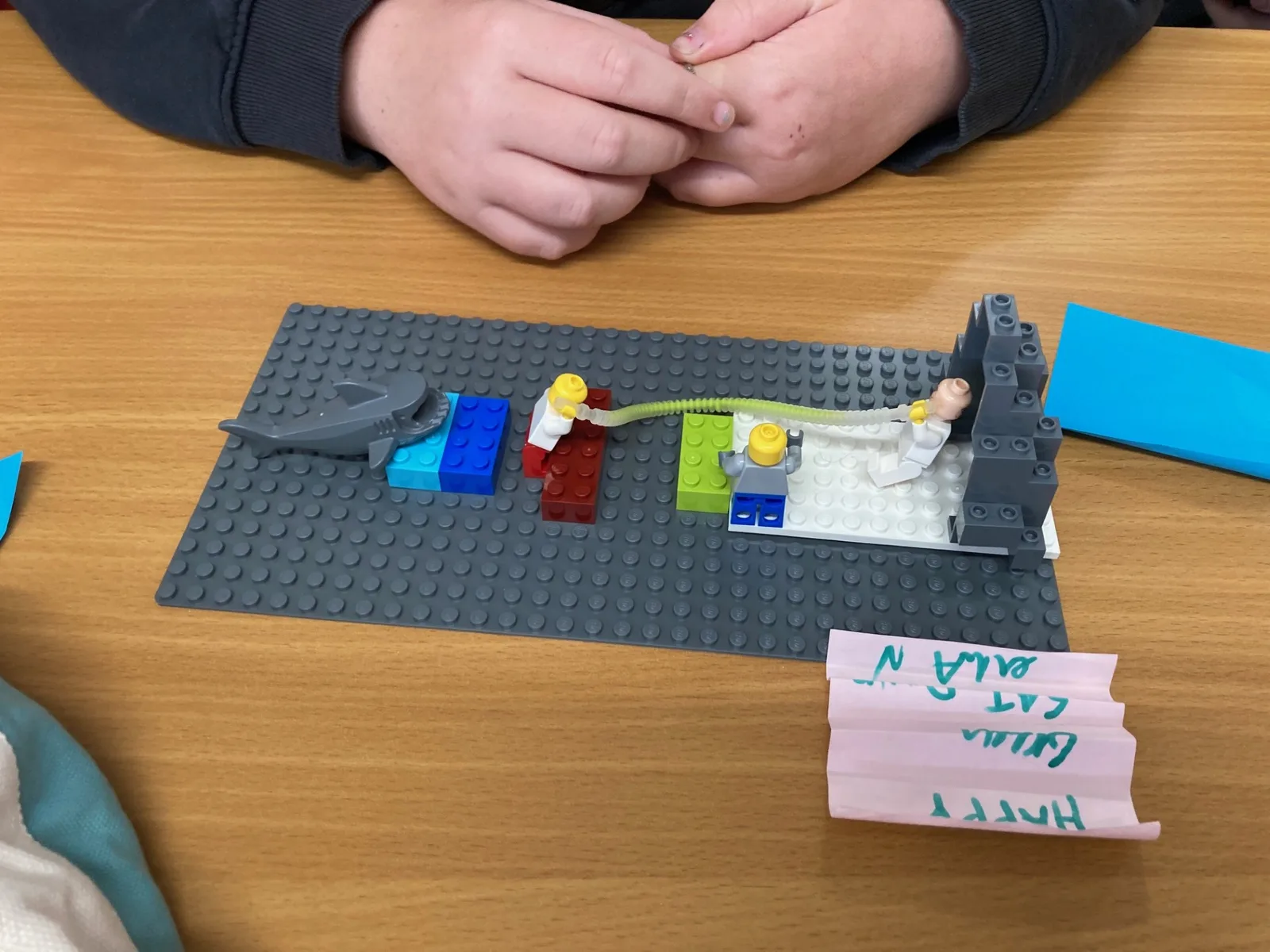
The children became comfortable with building models, making sense of why they chose each brick and telling the group what their model meant. We first built towers and talked about how they were all different, just like us. Then each child built a superpower that nobody else knew about.
-
2. Answer the challenge question
With a large bag of LEGO® in the middle of the table, the children were asked: "Build a model of how you want to feel at the end of playtime." It is not far from asking a workplace team to build a model of a high-performing culture or the habits of an engaged workforce.
-
3. Build a shared landscape
The class brought the key themes from every model together. Asking each child for three words helped them identify what mattered most.
What the class discovered
The children's models of how they wanted to feel at the end of playtime were all different, but three themes kept appearing: calm, relaxed and happy. One child described "feeling I have my feet in the sea"; another wanted to "feel like a helicopter, funny, silly and happy". That alignment helped us move to the next question: what could future playtimes look like?
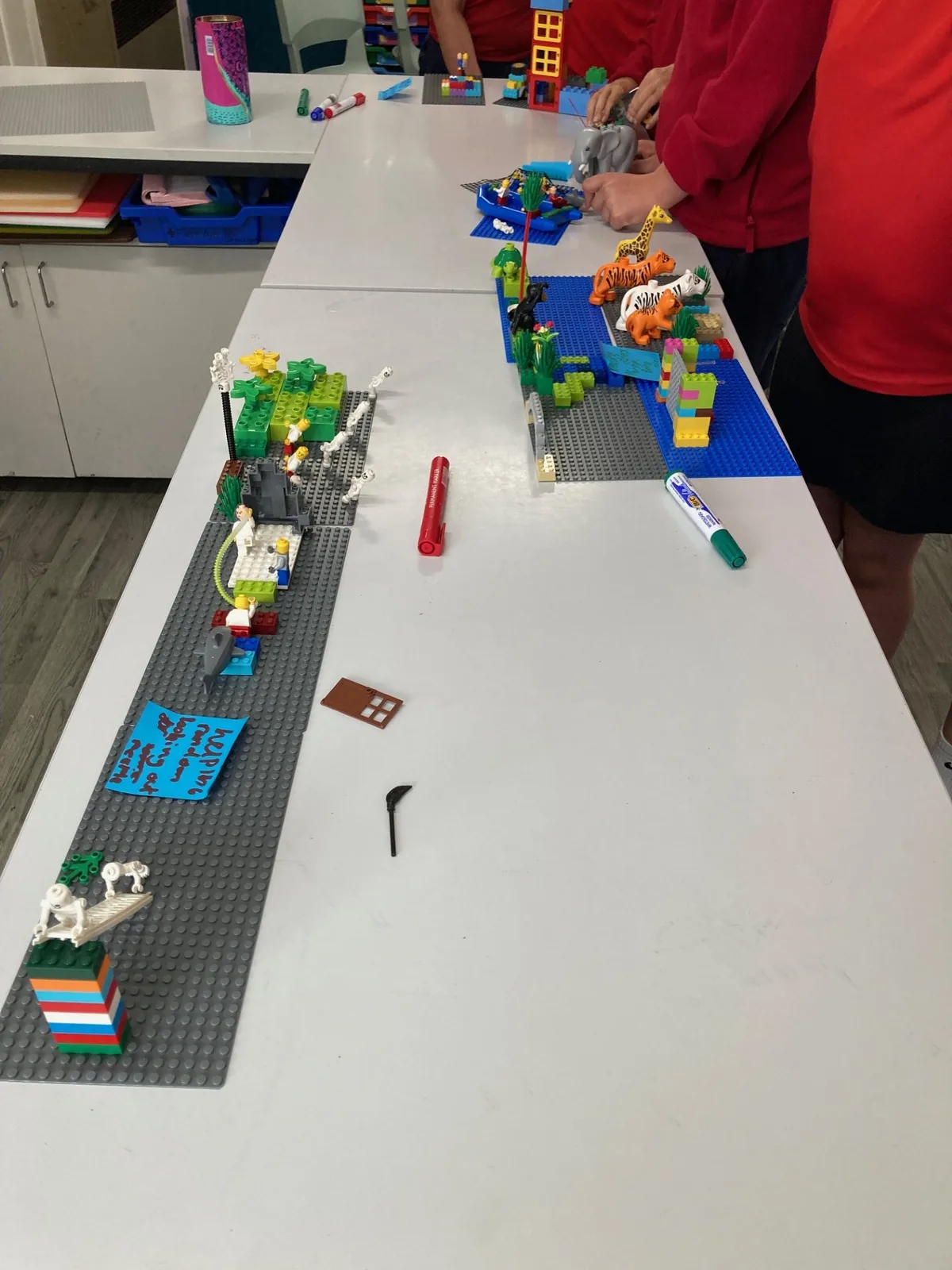
We then asked: "What can I do to make everyone in the class feel calm, relaxed and happy at the end of playtime?" The models built during a three-minute song were remarkably detailed, yet the message was consistent. The focus should be on sharing, helping and calm.
The children showed two people in a go-kart together, people pulling others up a tower and a quiet space. They grouped models with similar themes, carefully choosing where each one should sit and which way its people should face so the landscape reflected everyone's story.
Impact and outcomes
New learning can fade quickly without reinforcement, and the summer holidays were approaching. I wanted the workshop's ideas and actions to stick, so the final task was to build one model that held everything together.
The children created "Rando City". It included figures pulling each other up a tower, a shaded pond for calm and peace, two Wi-Fi masts, a den for shared toys and games, and a tower of minifigures showing that there is always more than one way to reach the top. The completed model was installed in the classroom as a visible reminder of the habits and actions the class had agreed.
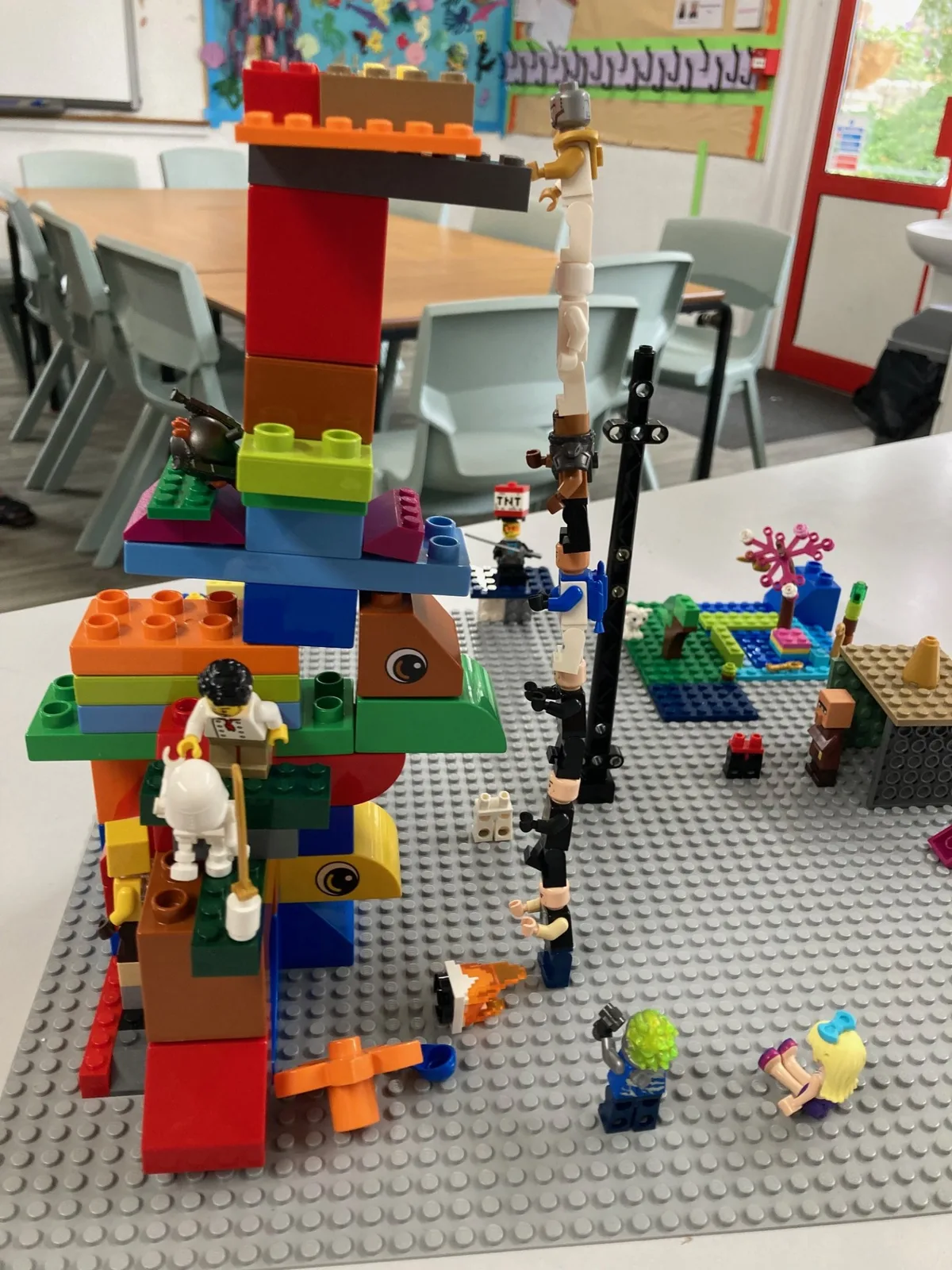
The class also chose a trigger phrase. If someone saw a child at the edge of the playground, shouting "Rando City" prompted the group to act: invite the child into the game, ask if they were okay, or involve them by passing the ball or hoop.
Does that sound similar to the check-ins we use at work?
Explore what your team could build
Book a 15-minute conversation with Sue about how a LEGO® Serious Play® workshop could help your team.